

Let me tell you something.
I’ve been staring at this headline for about twenty minutes now, and I keep reading it again because I’m convinced — convinced — that at some point the words are going to rearrange themselves into something that makes sense. They haven’t yet.
Allbirds — the shoe company, the merino wool people, the ones who made comfortable footwear for guys who describe themselves as “product thinkers” — is pivoting to become an AI infrastructure company. Their stock exploded 175%. And I need to sit with that for a second, because I think we’ve collectively lost the plot.

Let’s Talk About What Infrastructure Actually Means
When Oracle builds out GPU infrastructure, they’re not just racking servers. They’re engineering datacenters from the ground up with bare-metal GPU clusters connected via RDMA networking over InfiniBand — technology that traces back to NVIDIA’s acquisition of Mellanox in 2020.
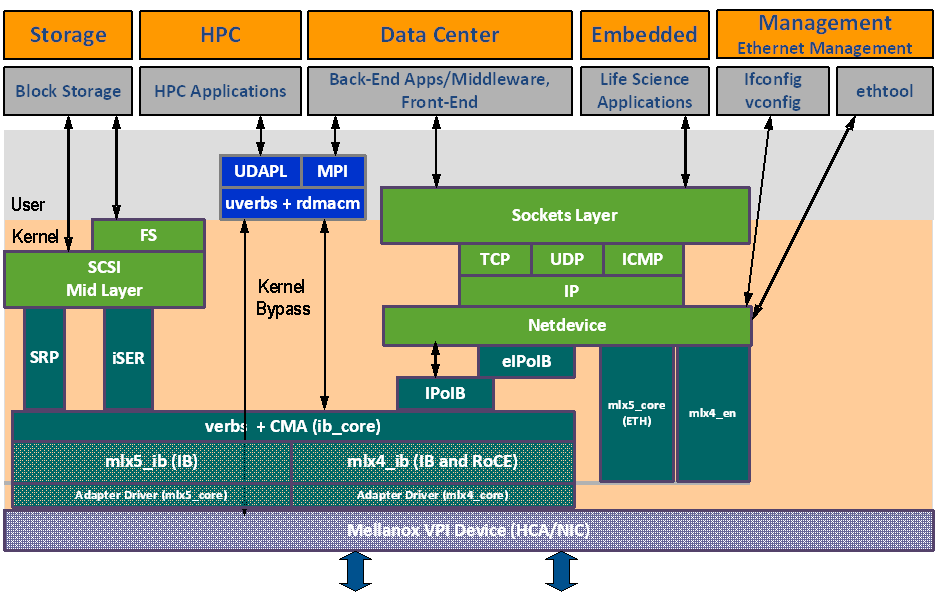
That gives OCI ultra-low-latency GPU-to-GPU communication across superclusters of tens of thousands of GPUs, which is not a nice-to-have — it is the bottleneck for large-scale AI training. It’s why companies running massive training jobs have turned to Oracle over AWS and Azure for raw cluster performance. That’s not a business you stumble into.
That’s years of datacenter engineering, networking expertise, and billions in capital expenditure producing a specific, defensible technical advantage.
And OCI is just one example. When AWS or Azure does it, they’re layering decades of cloud engineering, custom silicon, and battle-tested orchestration on top of raw compute. They’re building differentiated, AI-optimized software stacks that make enterprise adoption possible — not just plausible, but manageable.
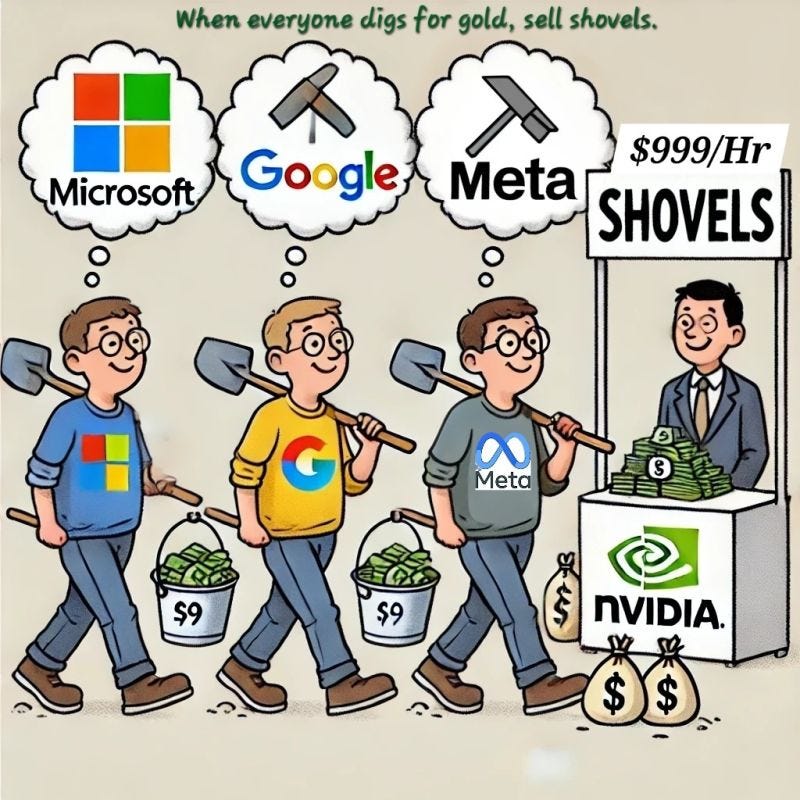
These companies are spending tens of billions of dollars. Tens. Of. Billions. And they’re doing it with thousands of engineers who’ve been thinking about distributed systems since before “GPU-rich” was a phrase anyone said out loud.
Allbirds has fifty million dollars.
Fifty million dollars in AI infrastructure is a seed round. It’s a promising seed round, sure. It’s enough money to get a meeting. It is not enough money to build a moat. It is not enough money to compete with hyperscalers. It is barely enough money to learn how expensive the electricity bill is going to be.
You don’t walk into a knife fight with a business plan and a wool shoe. You just don’t.
The Commodity Trap Is Right There, and It’s Wearing a Name Tag
Here is the thing that is making me want to pace around the room:
GPU reselling without intellectual property is a commodity business.
Full stop. You are buying a thing from NVIDIA and selling access to that thing to someone else, and the only differentiator you have is price — which means your margins compress, which means you need scale, which means you need capital that dwarfs what a mid-cap footwear brand can raise in a secondary offering.
It is so tempting, I understand that. The gravitational pull of going down the stack, of becoming the infrastructure layer, of being the one selling shovels — I get the seduction. But “tempting” and “wise” parted ways a long time ago on this one. The hyperscalers aren’t standing still. They’re layering proprietary services, custom chips, managed AI platforms, and enterprise compliance tooling on top of raw compute. They’re building the building. Allbirds is proposing to rent a room in someone else’s building and sublet it.
Meanwhile, the Actual Opportunity Is Staring Us in the Face
You want to know where the real value is? You want to know what keeps me up at night — not with dread, but with that restless, pacing energy of knowing something enormous is sitting right there?
The usability gap.
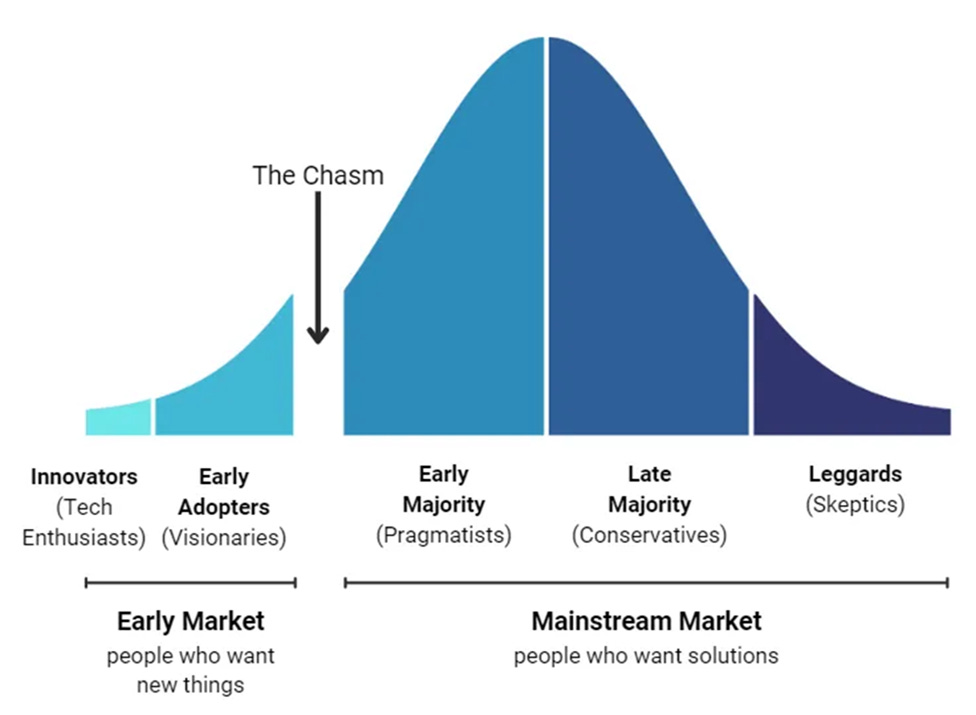
Right now, there is a chasm — and I mean a chasm — between the small percentage of people and companies burning through AI tokens at a breathtaking pace and the vast majority who haven’t opened a prompt window in a week. Ninety percent. Ninety percent of the potential market is sitting on the other side of a bridge that hasn’t been built yet. That is the crossing-the-chasm moment for AI. Not compute. Not GPUs. Figuring out why most people and most companies haven’t found their way into this thing yet, and then building the on-ramp. That is a trillion-dollar problem that is begging — begging — for someone to solve it.
And there’s another one. We have spent decades — decades — building Web 2.0 APIs, software interfaces, data architectures, all designed for human consumption. GUIDs, Social Security numbers, ZIP codes, RFID tags — the common identifiers that power modern software were designed for systems that parse structured data in predictable ways. But a language model doesn’t think in ZIP codes. It thinks in tokens and semantic relationships.
When you’re optimizing for latency, minimizing reasoning overhead, and operating at the speed these models demand, the entire identifier layer of modern software may need to be rethought.
Taking the accumulated infrastructure of the internet era and re-optimizing it for a world of LLMs, semantic search, and token economics? Trillions of dollars. Trillions. And it requires exactly the kind of creative, software-driven thinking that a nimble company could actually pull off.
Instead, Allbirds chose to resell GPUs.
So What Are We Doing Here?
I’ll be honest with you. I don’t have a satisfying explanation for why this happened. I don’t know what was said in that boardroom. I don’t know what pitch deck made this seem like the move. What I know is this: when a shoe company announces it’s becoming an AI infrastructure provider with fifty million dollars in capital and no discernible technical differentiation, and the market rewards it with a 175% stock surge, something has gone sideways.
The opportunity in AI is real. It is profoundly real. But the opportunity is in the hard, unglamorous work of closing the usability gap. It’s in reimagining how software talks to models. It’s in the layers of intelligence and integration that sit between raw compute and actual human value.
It is not in buying GPUs and renting them back out.
I don’t know. Maybe I’m wrong. Maybe Allbirds has a plan I can’t see from here. But I’ve been doing this long enough to know what a commodity trap looks like, and this one is textbook.
I too have decided to pivot to AI infrastructure. Can I demand a 100% pay rise now?