

Let me tell you a story, and stay with me, because the ending matters whether you write software for a living or you’ve never touched a line of code.
Two months ago the most anticipated AI model in years arrived. Fable 5. You could not escape the fanfare — the breathless previews, the front-page alarm, serious people in serious rooms wringing their hands over what this thing might do to all of us.
The hand-wringing wasn’t rhetorical: the Pentagon had already summoned Anthropic’s CEO for a talking-to over Claude, and within four days of Fable 5’s launch an export-control directive pulled the model off the market entirely — the first time this country ever restricted access to an AI model itself, rather than the chips beneath it — while enterprises scrambled and officials checked under the hood.
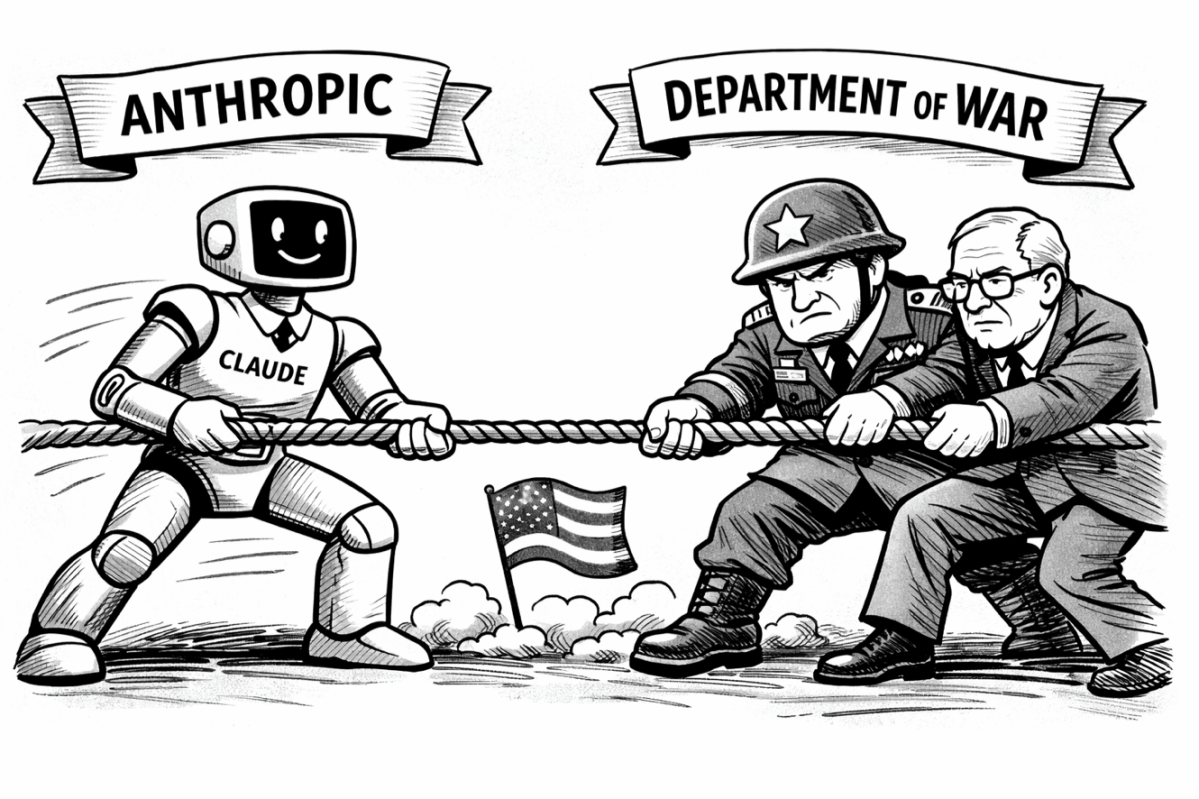
Two weeks later OpenAI’s GPT-5.6 got the same velvet-rope treatment: released to roughly twenty pre-approved companies under national-security review before the limits finally came off. This, we were told, was the turn.
Then the rest of us were allowed back in the building. I sat down with it. I gave it real work — my work, the kind that pays mortgages and ships products. And what I found was a very good model, a capable assistant, and nothing remotely resembling the revolution that occasioned all that ceremony.
I want to be precise, because precision is the point of this essay. These models are not bad. What I’m telling you is more uncomfortable: we have hit a plateau on capability — the practitioners have started saying it out loud, and even the banks have noticed — and the story the labs are selling has drifted so far from the product they’re shipping that the gap has become an economic problem all its own.
Walk with me.
Take Opus 5. Here is a model that has become — I choose the word carefully — conservative. Watch it think. It spends an extraordinary number of thinking tokens arguing against itself: proposing an answer, doubting it, litigating the doubt, then arriving, expensively, somewhere in the cautious middle. Don’t take my word for it — one reviewer documented a planning session that burned roughly 200,000 tokens over forty minutes without producing a plan.
I’d bet this is deliberate — burn deliberation to push hallucination rates down in aggregate, because hallucination is what frightens the enterprise buyer. But I’m not an aggregate. I’m a user at a desk on a deadline, and at my desk that trade shows up as a model slower, costlier, and more timid than the one before it.
The global statistic got better; my local experience got worse.
Optimize for the benchmark instead of the person at the keyboard and you haven’t gotten safer. You’ve gotten duller.
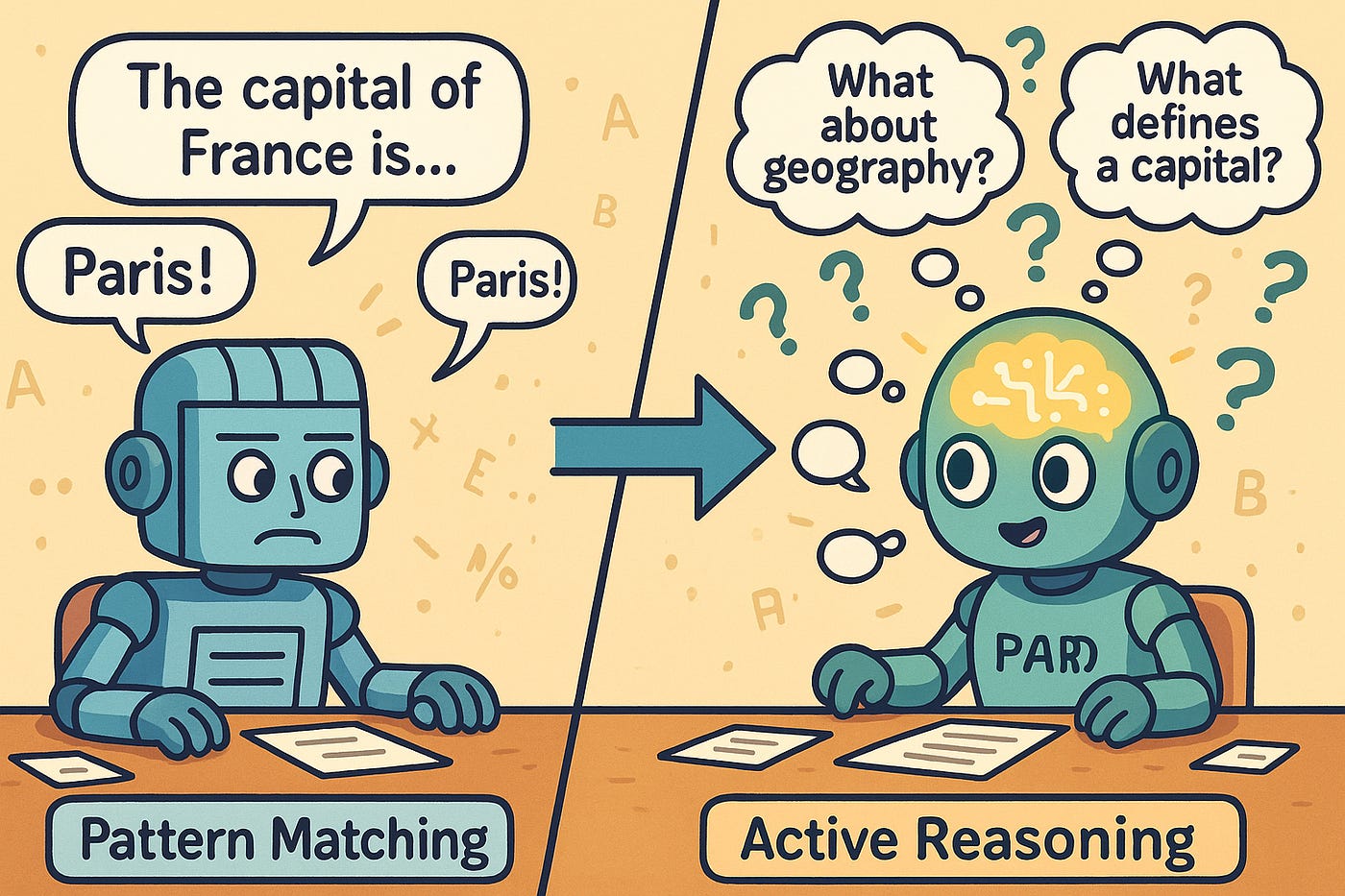
Now the pattern underneath it. Hand a frontier model an average-complexity task — compare two categories, tell me which is trending the wrong way — and it performs beautifully. The middle of the distribution of knowledge work has never been so well served. But push past the middle and the model doesn’t fail loudly. It does something quieter and more dangerous: it regresses to the average.
I tested this recently with Rust — a language that is practically a museum of advanced capability, built for people willing to reach. The models would not reach. Ask for a solution and you get the one ten thousand tutorials converge on, delivered with total confidence. Not the sophisticated approach the problem deserved. The popular one.
That is what these systems are: the collected output of everyone who ever wrote anything down, distilled into what the middle of the corpus would say. A staggering achievement — and a ceiling. And here’s the sentence the labs should tape to the wall:
The averaging effect will be the downfall of these models.
Creativity — reaching past the typical toward what a new problem requires — isn’t a garnish on knowledge work. It’s the essence of it. Every problem worth paying a professional to solve is one the average approach hasn’t already solved.
I didn’t reach this conclusion in the abstract.
My team and I spent months researching how to improve memory subsystems for AI agents — not a vector database bolted onto a chatbot, but memory with ambition. Memory that stores methods rather than stale numbers, the way a great analyst remembers how a figure is derived, and can re-execute those methods to stay current with the world. And beyond recall: memory that wonders. Machinery for hunting the gaps it keeps getting asked about and can’t answer, probing contradictions it hasn’t resolved, proposing bridge hypotheses between clusters of knowledge nobody explicitly connected.
We tried multiple approaches to expanding not just the recall but the creativity of memory operations. The finding? The models were flatly inflexible. Hand one a genuinely novel memory capability and it uses it the way it uses everything — in the most average possible manner. It retrieves. It summarizes. It never gets curious. Every ounce of inventiveness — every gap hunted, every hypothesis proposed — we had to engineer around the model, as external scaffolding bolted onto a mind that wouldn’t generate the behavior on its own. The models lack the richness, the dimensionality, to support it. And that richness is exactly what innovation inside enterprise teams runs on.
“But AGI is coming”
...says the founder on the stage. “Invest accordingly.” Can we be honest for one paragraph?
The AGI argument, as deployed, is a valuation story
A flat excuse from startup CEOs to justify numbers no revenue line supports, bound to no reality I can locate. And I’ve looked, daily, at the edges where the marketing can’t follow. Even the market’s own cheerleaders have started muttering about 1999.
Which brings us to the arithmetic. If models aren’t replacing actual workloads — and outside a narrow band, they are not — the whole economic case rests on productivity gains. As a man who used to sell productivity software for a living, let me tell you: that is one of the hardest sales in commerce.
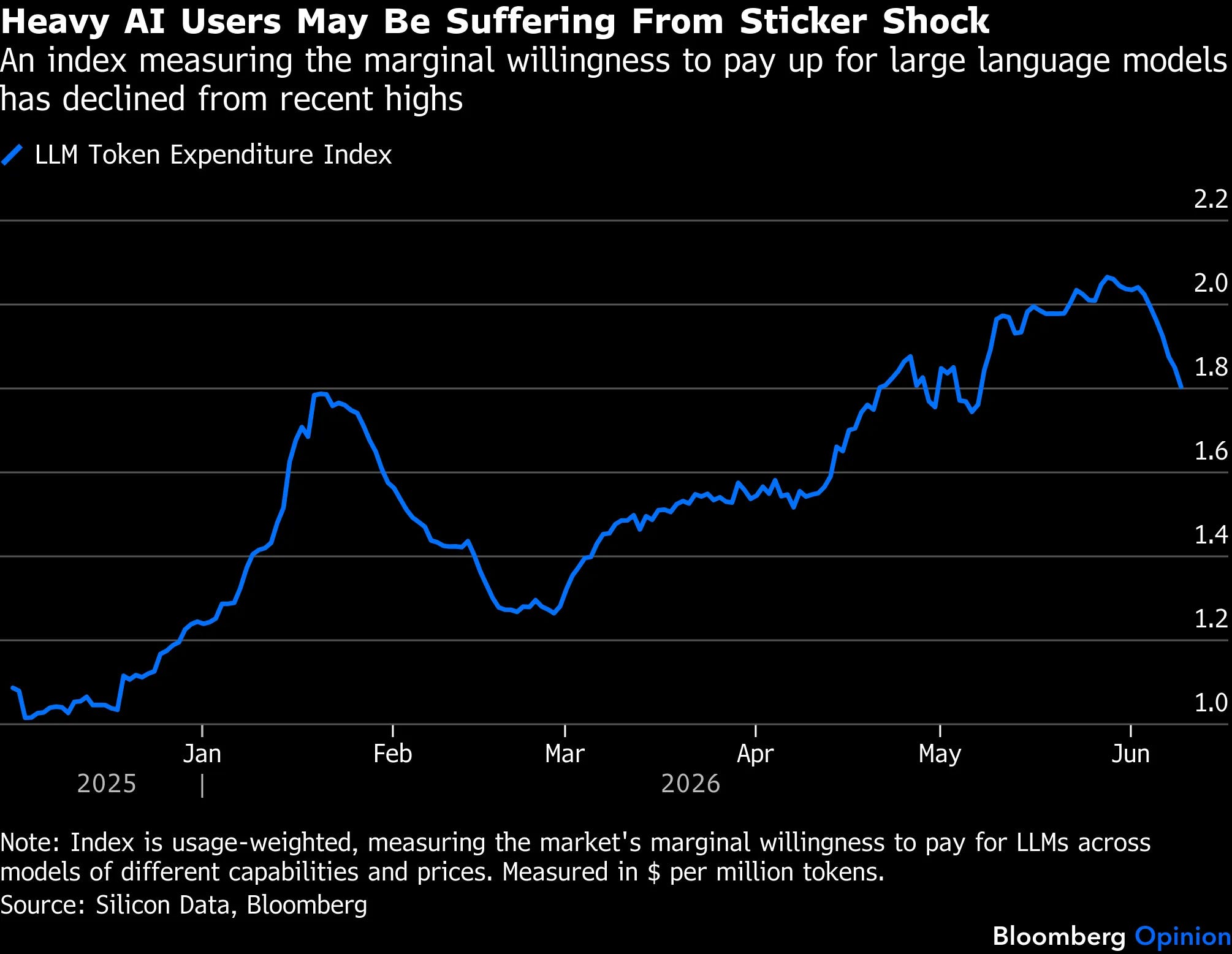
What is the ROI? MIT went looking and found that 95 percent of enterprise AI pilots deliver no measurable return. Your team works somewhat faster — net of review time, correction time, the rework when the confident average answer was confidently wrong. The benefit is real but diffuse: everywhere in the workflow, nowhere on the income statement. The CFO can’t find it, and what the CFO can’t find, the CFO stops paying for. The vendors can feel this — witness OpenAI cutting GPT-5.6 prices within a month of launch as companies grow sensitive to costs.
The main problem? Enterprises believe that the model can solve all challenges and are being sold down the river that all of their edge cases can be solved with agent-generated code.
Meanwhile the labor market gets cut on the sharp edge. What agents do well maps almost exactly onto entry-level work, so that’s the rung being removed — Stanford’s payroll data now shows employment for 22-to-25-year-olds in AI-exposed occupations shrinking nearly four percent a year while their elders’ grows. The experienced get accelerated — until you think two moves ahead. That cohort will retire and grow old, and we’ve dismantled the ladder anyone climbs to replace them.
Worse: much of that senior cohort hasn’t done individual-contributor work in years — they made decisions. Now they’ve been handed agents that perform like earnest junior developers, because that’s what these agents are — not senior engineers, not managers — and quietly demoted into line managers of tireless junior machines. That isn’t a productivity revolution. It’s churn, with the bill arriving years from now, addressed to all of us.
The mess has a precise shape: not good enough to truly replace headcount and restructure the economy; not poor enough to be relegated to a corner. The in-between is the most expensive place a technology can sit, and the frontier providers built it.
So get pragmatic. Retire the far-out theories about AI remaking the economy in a decade and attend to the short-term gap your own teams created this quarter.
The model alone struggles to achieve the ROI.
FDEs aren’t the answer.
Tooling integrating AI with the business is.
* But the models need to expand the APIs available to teams building the tooling.
And because you don’t get to name a problem you won’t help solve: frontier labs need to open the machine. Bring back fine-tuning — with far more knobs. Because the knobs are just not there. “Reasoning,” the flagship dial of this generation, is a joke: researchers even have a name now for what practitioners keep finding — inverse scaling in test-time compute, where giving a model more time to think makes the results worse.
In scenario after scenario, more thinking tokens buy more elaborate mistakes at greater cost — the model throwing concepts at the wall and trialing them, which is no efficient way to think. And steering is a hatchet and a hammer when what I need are instruments: internal APIs to guide a model through its reasoning loop — where to invest, where to stop second-guessing, where the average answer is the wrong answer.
The labs hoard the internals under the promise of AGI. If that promise is the mirage I think it is, the hoarding isn’t strategy — it’s just hoarding. Hand the knobs to the ten thousand teams who know their domains better than any lab ever will, and these models finally become what the sales deck claims: productive members of the team, with an ROI you can actually find.
I’ll end where you might not expect: I’m not a pessimist. I’m proud that my employer looks at this plateau and, instead of shrugging, challenges me to drive innovation with the tools we actually have. That posture is available to everyone — clear eyes, real work, loud and specific demands. The models aren’t gods and they aren’t garbage. They’re junior colleagues with infinite stamina and no imagination, and there’s honest work to do figuring out what that’s worth and how to make it more.
But unless we see a new wave of rapid change, I worry about a coming AI “stagflation” - where valuations are rising based on a promise, but the actual value is not correspondingly growing.